
Language is more than words
Language coordinates perception, sound, meaning, action, and social interaction. Learning another language is therefore much more than acquiring vocabulary and grammar. It means developing new perceptual, phonetic, cognitive, and communicative possibilities.
My approach to language learning begins with how humans actually acquire language. Rather than treating the learner as a translator who must become progressively faster, I am interested in how adults can develop increasingly direct relationships between sounds, meanings, concepts, and actions—building a language that can be used rather than continuously converted.
This perspective brings together applied linguistics, phonetics, cognitive science, embodied cognition, and lifelong learning.
How I can help
Learn a language for real communication — not just for exercises and tests. My courses combine language learning with phonetics, pronunciation, listening, and communicative practice, helping you become more accurate, more spontaneous, and more effective in real situations.
Speak with greater fluency and
spontaneity
Build faster access to vocabulary, structures and patterns so that you can rely less on mental translation and communicate more naturally.
Improve pronunciation and phonetic control
Train your ear and articulation so that you can perceive and produce sounds, rhythm and intonation more accurately — and be understood more easily.
Understand real spoken language more easily
Train your listening beyond textbook speech, including natural pace, connected speech, reduced forms, rhythm, and different accents.
Communicate effectively in real situations
Develop the language you need for conversation, study, work, presentations, travel, and other situations where communication has to function reliably.
How we acquire a language
First-language acquisition and foreign-language learning are not the same process. Children acquire their first language through prolonged exposure, perception, interaction, pattern detection, prediction, and use—long before they can explain its grammar. Adults often approach a new language very differently: through explicit rules, written forms, vocabulary lists, and translation.
Adult learning does not need to imitate childhood. Adults bring more developed cognitive, metalinguistic, and strategic learning abilities that can be used deliberately. The more useful question is which features of natural language acquisition can be preserved or deliberately recreated, while taking advantage of the strengths of the adult learner.
This changes the goal of language training: not simply relying on translation more efficiently, but progressively building direct associations among sound, meaning, context, intention, and action.
Sensitive periods—and what adults can still learn
Language learning is shaped by age, but not determined by it. Some aspects of linguistic development are more sensitive to timing than others, particularly phonetic perception and pronunciation. At the same time, adults remain capable of substantial language learning and perceptual adaptation.
The practical question is therefore not whether adults can recreate childhood, but how they can create learning conditions that support attention, perceptual flexibility, repeated exposure, meaningful use, and sustained practice.
Rather than treating age as a fixed barrier, I am interested in how learning strategies can be designed around the actual strengths and constraints of the adult learner.
Hear first, speak better
Accurate perception is a major foundation for learning to produce unfamiliar speech sounds. A central part of second-language learning is therefore the development of a new phonetic repertoire: learning to detect distinctions that may not exist in the first language and building stable perceptual categories for the sounds of the new one.
This is why pronunciation training should not focus on articulation alone. Listening and perceptual training should be part of the process from the outset. Developing finer auditory discrimination can make production more accurate, reduce reliance on approximate first-language categories, and support more efficient learning throughout the language system.
In practical terms, learning to hear a language differently is often the first step toward speaking it differently.
Video demonstration
Phonetic perception, pronunciation and language learning in practice.
▶Video coming soon.
A practical demonstration of phonetic perception and pronunciation training.
Beyond translation
Translation is a sophisticated skill in its own right, but it is not the same as knowing and using another language. When every word or sentence must first be mediated through the first language, communication remains dependent on that linguistic pathway.
With sufficient exposure and practice, associations in a second language can become increasingly direct: a sound can evoke a concept, an intention can generate an utterance, and meaning can be understood without consciously searching for an equivalent expression in the first language.
The goal is not to eliminate translation. It is to make translation a choice rather than a prerequisite for understanding and producing language.
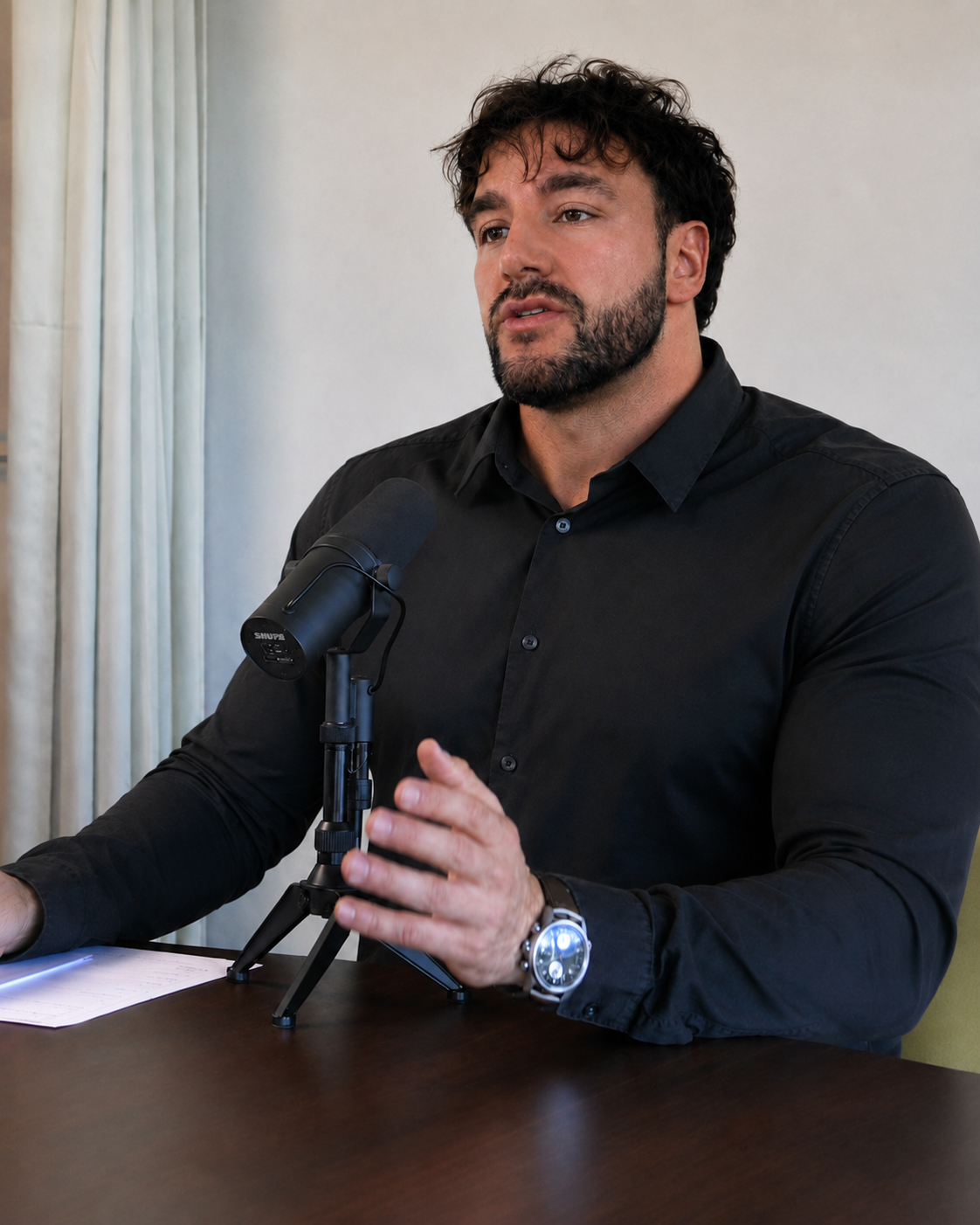
Language learning across the lifespan
Learning a language is a cognitively demanding activity. It engages perception, memory, attention, executive control, social cognition, and the continuous coordination of meaning with sound and action.
Lifelong language learning may therefore be relevant to cognitive reserve: the capacity to maintain cognitive functioning despite age-related brain changes or pathology by flexibly using available cognitive resources. Research on multilingualism and cognitive aging is complex, however, and does not support simplistic claims that speaking additional languages prevents dementia or uniformly protects against cognitive decline.
The more defensible—and more interesting—idea is that learning and actively using languages can form part of a cognitively rich lifestyle. Language learning also has the advantage of being a meaningful, adaptive skill that combines cognitive challenge with communication, culture, and social interaction.
Language, thought &
embodiment
Language does not simply express thought; it can also help organize it. Categories, metaphors, distinctions, and narrative structures can shape attention and influence how we describe experience, formulate problems, and interpret internal states. This does not mean that language rigidly determines what we can think, but that it can make some distinctions and representations more accessible than others.
This relationship becomes especially interesting when language is considered from an embodied perspective. Meaning is not generated by abstract symbols alone: it is also shaped by perception, action, sensation, and interaction with the environment.
For this reason, work on language can also involve attention to cognition, perception, and behavior. Refining how we describe experience, expanding our linguistic repertoire, and becoming more aware of the relationship between words, bodily states, and action may support more precise thinking and more flexible responses.
Language as social convention
Language is not only a vehicle for literature, poetry, or individual expression; it is also a social convention. We learn not only words and grammatical structures, but shared expectations about what can be said, how, to whom, and in which context.
These conventions differ across languages, communities, and cultures, yet speakers often experience their own conventions as natural rather than learned. Proficiency in another language therefore requires sensitivity not only to its formal system, but to the social patterns through which meaning is negotiated.
Encountering different communicative conventions can make otherwise invisible assumptions explicit. This awareness can improve accuracy, clarity, adaptability, and communicative effectiveness across contexts.
How I work
I do not use a single standardized method for every learner. Language learning and communication are adaptive processes: effective training should respond to the learner, the task, the context, and the abilities that need to be developed.
My work can focus on second-language acquisition, pronunciation and phonetic training, accent and dialect work, communication skills, or more effective learning strategies, through one-to-one sessions, courses, workshops, and tailored consultation.
The aim is not to impose a single model of “correct” speech, but to identify what limits effective communication or learning and develop the perceptual, cognitive, and practical skills required for the desired outcome. This can also include work on the first language, with attention to vocabulary, articulation, listening, and communicative precision.
Test your language level
Choose a language to take a free preliminary assessment of your current level. You’ll receive an initial profile of your strengths and areas for development, with the option to book a more in-depth individual assessment and receive personalised recommendations.
What happens in an individual language assessment?
1. We start from your preliminary language profile
The free preliminary language assessment is available at no cost. Once completed, your results are sent to you immediately by email, giving you an initial profile of your current level and highlighting areas of relative strength and difficulty. If you want a more complete and personalised evaluation, you can then book a paid one-to-one language assessment with me.
2. The paid assessment looks at how you communicate live
In a one-to-one session, we move beyond the automated profile and look at how you actually use the language in real time. This includes speaking fluency, communicative effectiveness, pronunciation, phonetic accuracy, listening–response patterns and the strategies you rely on when expressing yourself. The aim is to understand not only what you know, but how readily and effectively you can use it in communication.
3. You receive specific writing tasks before the live assessment
Once you request the paid individual assessment, I send you a small set of writing assignments and clear instructions on what to prepare and return before the live session. During the consultation, we review your writing together, looking at accuracy, vocabulary, structure, register and communicative effectiveness, so that written performance can be considered alongside your spoken language profile.
4. We turn the assessment into a personalised learning plan
At the end of the process, we bring together the results of the preliminary test, live communication, pronunciation and phonetic observations, and writing performance to identify your main priorities. We then discuss the most appropriate next steps — for example, individual or group training, session frequency, areas of focus and the type of materials and practice that are likely to be most useful for your goals.
The preliminary profile is free; the full individual assessment is a separate paid service.
The free test gives you an immediate overview of your current level, while the paid one-to-one assessment adds live communication, pronunciation and phonetic evaluation, review of the assigned writing tasks, and recommendations for the most appropriate learning path.
Start with the free preliminary language test. Each assessment takes approximately 35–45 minutes to complete, and your results are sent to you immediately by email. The test provides an initial profile of your current level and serves as the starting point for any subsequent comprehensive one-to-one language assessment. Free preliminary assessments are available for English, German, Spanish, French, Italian and Serbo-Croatian.
Take your free language test
Choose your language to begin.
Choose a language
Coming soon
This free preliminary language assessment is currently in development. It will provide an initial profile of your language skills, with the option to book a more in-depth individual assessment and receive personalised recommendations.
Courses & Training
Online courses in language learning, phonetics, and pronunciation, alongside one-to-one sessions, workshops, and tailored programs for professionals and organizations.
What does a tailored language course actually involve?
1. We establish your actual starting point
The process begins with a preliminary language test and, where useful, an individual assessment of how you currently understand and use the language. This helps identify your level, strengths, recurring difficulties and the areas that deserve the most attention.
2. We define what you actually want to achieve
We discuss your goals, the situations in which you need the language and the kind of communication you want to become capable of — from everyday conversation to study, professional work, presentations or more specialised contexts.
3. We design the learning path around you
Together, we define the most appropriate format — individual or group-based — the frequency of sessions and the balance between guided work and independent practice. Materials are selected and, where useful, created specifically around your level, goals, interests and communicative needs rather than taken from a fixed course template.
4. Communication starts from the beginning
The approach is strongly communicative and spoken language remains central. The target language is used from the earliest stages — even with complete beginners — so that listening, interaction and spontaneous language use develop alongside grammar and vocabulary rather than being postponed until later.
5. You always know what to work on between sessions
Teaching is designed to be intuitive, but never vague. Additional materials make clear what has been introduced during each session and what you should practise between lessons to consolidate, extend or apply what you are learning.
The method adapts as you progress.
The course is continuously adjusted to your goals, interests, learning preferences and response to different kinds of practice. The aim is not to make you fit a fixed program, but to shape the program around you.
Courses can be delivered one-to-one or in small-group formats, online or in person, depending on your goals and the type of training required.
Accent & Dialect Coaching
For some learners and performers, pronunciation is not simply about being understood. The goal may be to develop much finer control over how a language sounds — whether to approach a particular native accent, prepare a dialect for an acting role, refine professional speech, or simply explore pronunciation in greater depth. My background in articulatory phonetics allows this work to focus precisely on how speech sounds are perceived and produced, rather than relying on imitation alone.
What can accent & dialect coaching involve?
1. We begin with a phonetic analysis
The work starts with a live, one-to-one analysis of your current speech in relation to the accent, dialect or pronunciation target you want to develop. I look at the specific phonetic patterns that distinguish your present production from the target, including vowels and consonants, articulatory settings, stress, rhythm, intonation and connected speech.
2. We turn the analysis into specific articulatory work
Rather than relying on imitation alone, we work on how the target sounds are physically produced. This can include tongue and lip position, jaw opening, place and manner of articulation, voicing, vowel shaping and the coordination of individual sounds within connected speech.
3. We build the sound system, not just individual sounds
We work beyond isolated vowels and consonants to explore the broader articulatory setting of the target accent: how the jaw, tongue, lips and vocal tract tend to organize themselves, how sounds influence one another in connected speech, and how these patterns contribute to the overall physical feel of the accent.
4. We train rhythm, stress, intonation and connected speech
An accent is also a system of timing and melody. We work on stress patterns, rhythm, intonation, reductions, linking and other features of connected speech so that the target pronunciation begins to function as a coherent speech pattern rather than a collection of individually correct sounds.
5. We move from conscious control to spontaneous speech
The final goal is transfer. Target features are progressively moved from focused exercises into words, phrases, text, conversation and performance so that they become increasingly available without constant conscious monitoring. For actors, the work can be applied directly to a character, script or role; for other clients, it can be transferred to professional communication, everyday speech or any context in which the target pronunciation needs to remain reliable.
There is no single “correct” native accent.
When a more native-like pronunciation is the goal, we first define the variety and speech model you actually want to approach, taking into account factors such as geographical variety, social context, professional setting, character, role or personal preference.